E-Tech Complete Solutions Limited

- Home
- TSA 2026: How the REST-AI Framework Addresses the Foundational Digital Literacy Gap in AI Adoption
TSA 2026: How the REST-AI Framework Addresses the Foundational Digital Literacy Gap in AI Adoption
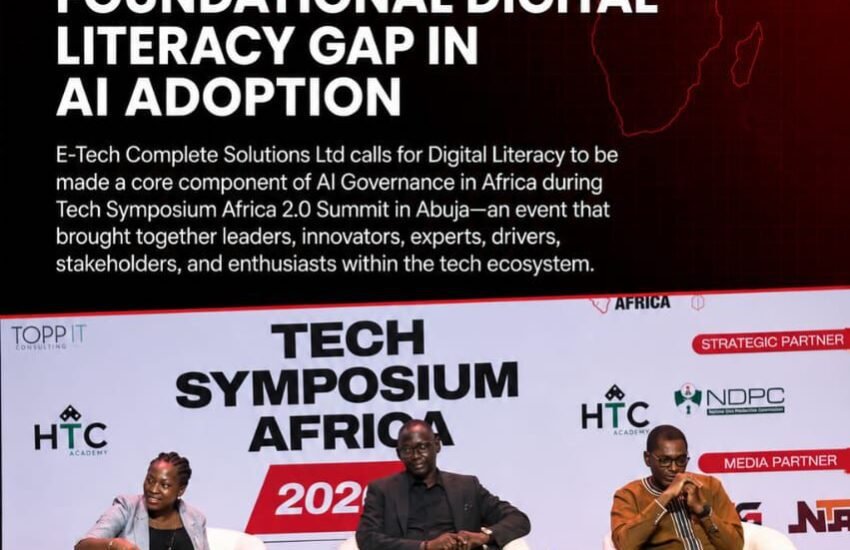
As conversations around AI governance in Africa evolve, one challenge remains consistent, the gap between policy development and real-world adoption. The REST-AI framework offers a structured approach to bridging this divide by directly addressing the foundational issue of digital literacy.
REST-AI which stands for Responsible, Ethical, Secure and Transparent AI, provides more than a governance checklist. It introduces a layered approach that connects policy with human capacity, ensuring that both institutions and citizens are equipped to engage with AI systems effectively.
At its core, the framework recognizes that responsible AI adoption begins with understanding. Digital literacy becomes the entry point through which users can interpret, evaluate and interact with AI technologies. Without this baseline knowledge, even the most secure and ethical systems can be misused or misunderstood.
The “Responsible” and “Ethical” pillars of REST-AI rely heavily on user awareness. Individuals must understand issues such as bias, data privacy and algorithmic decision-making to make informed choices. This is only possible when digital literacy is prioritized as a foundational skill.
From an institutional perspective, the framework also addresses capacity gaps. Governments, educational institutions and private organizations must not only adopt AI tools but also build internal expertise. This includes training programs, certification pathways and continuous learning models that align with evolving technologies.
The “Secure” and “Transparent” components further reinforce the need for literacy. Security protocols and transparency mechanisms are only effective when users understand how to navigate them. A digitally unaware population cannot fully benefit from safeguards designed to protect them.
Insights from the Tech Symposium Africa Summit 2026 highlighted this disconnect clearly. While African nations are making progress in developing AI strategies, implementation remains uneven due to limited technical understanding at both user and institutional levels.
The REST-AI framework addresses this by integrating education into governance. It encourages collaboration between policymakers, tech companies and digital literacy providers to create an ecosystem where knowledge and technology evolve together.
In practical terms, this means embedding digital literacy into national AI strategies, supporting certification programs and ensuring that AI adoption is accompanied by structured learning initiatives.
By aligning governance with human capacity, REST-AI moves beyond theory into actionable impact. It provides a pathway for Africa not only to adopt AI, but to do so in a way that is inclusive, informed and sustainable.
Video excerpts from the panel session below...

